The Challenge of Incident Response Planning for Nonprofits
In an increasingly digital world, nonprofits and small organizations face a stark reality: cyber threats are persistent and evolving. Unfortunately, while these organizations often lack the resources of larger corporations, they are still at risk of data breaches, system outages, and other cybersecurity incidents. The absence of a robust incident response plan can transform these threats from manageable risks into catastrophic failures.
The major hurdle for many nonprofits is access to quality planning resources. Traditional incident response plans developed by cybersecurity consultants can cost anywhere from $5,000 to $35,000, an expense that is simply beyond reach for many organizations. This financial barrier leaves many nonprofits vulnerable, as they continue to operate without a structured approach to incident management. However, there is a solution that bridges this gap: IRPForge.
IRPForge offers an innovative approach to incident response planning, specifically designed for nonprofits and small organizations. With a user-friendly guided intake process, IRPForge allows organizations to create tailored incident response plans without needing extensive cybersecurity knowledge. In this article, we will explore IRPForge in depth, discussing its key features, the problems it addresses, and how it can be a game changer for smaller organizations.
What is IRPForge?
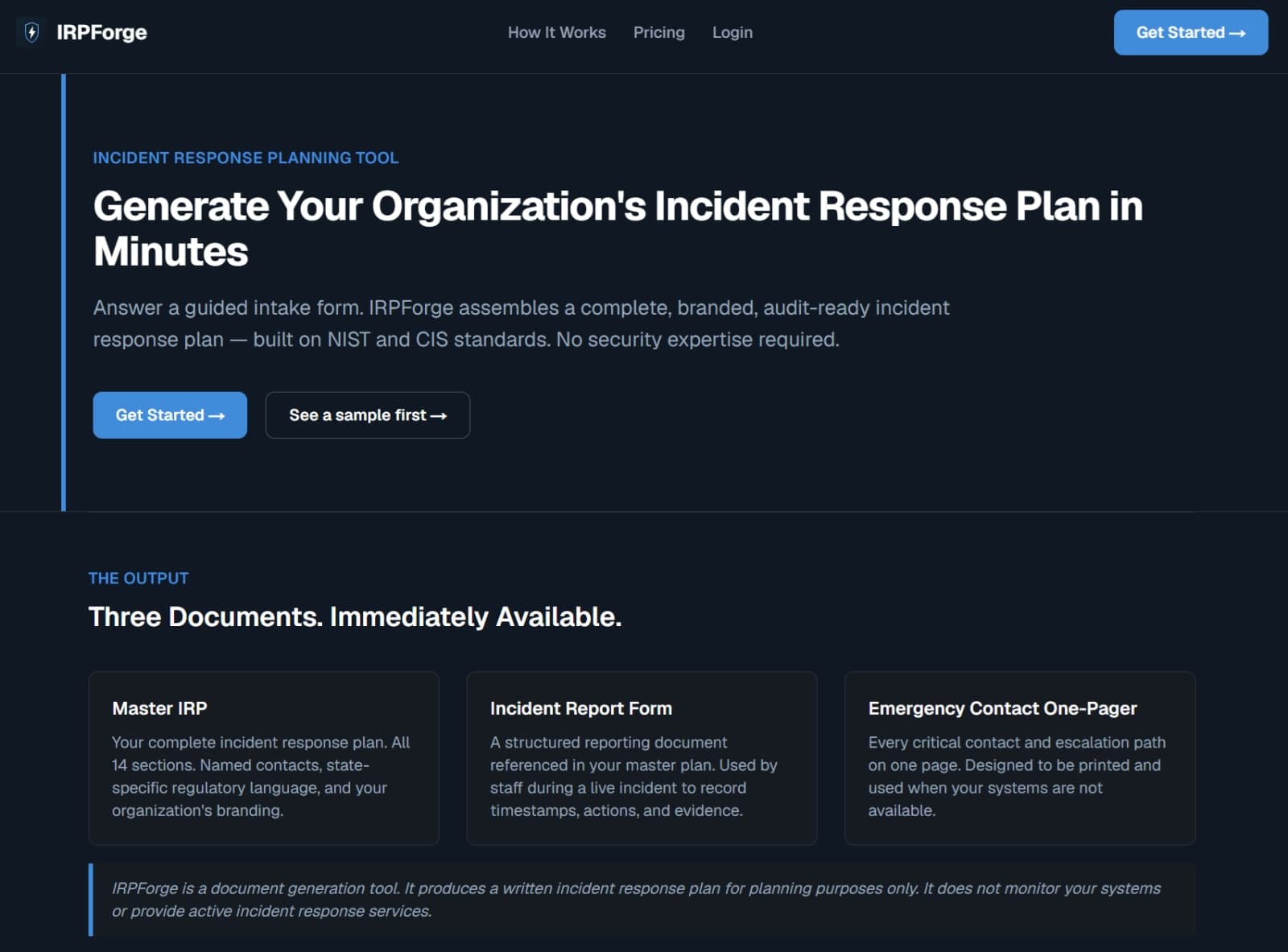
IRPForge is a SaaS tool that generates comprehensive incident response plans tailored for nonprofits and small organizations. At its core, IRPForge simplifies the incident response planning process by providing users with a guided intake form based on established frameworks such as NIST SP 800-61r3 and CIS Controls v8.
Once users complete the intake process, they receive a complete incident response plan package that includes:
- A Master Incident Response Plan, which outlines the organization’s strategy for responding to incidents.
- An Incident Report Form that staff can use during an incident to document actions taken and evidence collected.
- An Emergency Contact One-Pager that consolidates crucial contact information for quick access during emergencies.
This comprehensive approach ensures that organizations have a structured method for responding to incidents, even if they lack dedicated security personnel. Moreover, IRPForge’s plans are not generic or AI-generated; they are crafted based on the specific inputs provided by the organization, ensuring relevance and specificity.
The Problem IRPForge Solves
For many nonprofits and small organizations, the lack of an incident response plan is not just a minor oversight; it is a significant vulnerability. When incidents occur—be it a data breach, ransomware attack, or system failure—the absence of a predefined response strategy can lead to confusion, chaos, and ultimately, greater damage.
Consider the scenario of a small nonprofit that discovers sensitive donor information has been compromised. Without a plan in place, the staff may struggle to determine the appropriate steps to take, leading to delayed reporting, mishandling of sensitive data, and potential legal consequences. Additionally, the lack of a structured response can damage the organization’s reputation, eroding donor trust and jeopardizing future funding.
IRPForge directly addresses these pain points by offering an affordable and efficient way to develop a tailored incident response plan. By providing organizations with the tools and templates they need to create robust plans, IRPForge empowers them to manage risk proactively rather than reactively.
How IRPForge Works
IRPForge operates through a straightforward, user-friendly process that enables organizations to generate their incident response plans with ease. Here’s how it works, step by step:
- Create an Account: Users start by signing up for an IRPForge account, which allows them to access the guided intake form.
- Complete the Intake Form: The intake form consists of 24 questions that cover six critical phases of incident response planning, including organizational structure, data types, team contacts, IT setup, state regulations, and plan preferences. Completing this form typically takes between 10 to 20 minutes.
- Review Answers: After submitting the intake form, users have the opportunity to review their responses on a confirmation screen. They can make any necessary edits before proceeding.
- Select a Plan and Make Payment: Users choose from different pricing plans based on their needs and complete the payment process.
- Download Documents: Once payment is confirmed, users can immediately download their Master Incident Response Plan, Incident Report Form, and Emergency Contact One-Pager.
This streamlined process ensures that even organizations with limited cybersecurity knowledge can develop a comprehensive incident response plan quickly and efficiently. With IRPForge, there is no need for extensive consultation or high fees; the tool is designed to be accessible and effective for all types of organizations.
Key Features of IRPForge
IRPForge offers a range of features that make it an invaluable tool for nonprofits and small organizations. Here’s a closer look at some of its key features:
- Guided Intake Process: The easy-to-follow intake form guides users through critical questions, ensuring that they provide all necessary information for a tailored plan.
- Customizable Plans: Plans are generated based on specific inputs, ensuring that they reflect the unique circumstances and needs of each organization.
- NIST and CIS Compliance: The plans adhere to industry standards, including NIST SP 800-61r3 and CIS Controls v8, enhancing their credibility and effectiveness.
- Audit-Ready Documentation: The output documents are designed to be compliant and ready for audit, making them suitable for organizations that must adhere to regulatory standards.
- State-Specific Language: The plans include state-specific breach notification language, ensuring that organizations are aware of legal requirements in their jurisdictions.
- Multi-Document Output: Users receive three different documents, providing a comprehensive approach to incident response planning.
These features collectively ensure that IRPForge users have the tools they need to respond effectively to cybersecurity incidents. By integrating industry standards into a user-friendly platform, IRPForge sets itself apart as a leader in incident response planning.
Who IRPForge is For
IRPForge is specifically designed for nonprofits, small businesses, and organizations that lack a dedicated security team. Here are some concrete personas who would benefit from using IRPForge:
- Nonprofit Managers: Nonprofit leaders who are responsible for ensuring organizational compliance and safeguarding donor information can use IRPForge to create a tailored incident response plan that meets their unique needs.
- Small Business Owners: Entrepreneurs running small businesses without a dedicated IT or security team can leverage IRPForge to quickly establish a solid incident response framework, protecting their business and customer data.
- Volunteer Organizations: Groups that rely on volunteers may face challenges in maintaining consistent oversight of cybersecurity practices. An incident response plan from IRPForge can ensure that everyone knows their roles in the event of an incident.
- Compliance Officers: Individuals tasked with ensuring compliance within their organizations will find IRPForge’s audit-ready documentation to be a critical resource in meeting regulatory requirements.
By catering to these diverse audiences, IRPForge plays a crucial role in enhancing the cybersecurity posture of organizations that typically struggle to access quality incident response planning resources.
IRPForge vs Alternatives
While there are other incident response planning tools available, IRPForge stands out due to its focus on affordability and user-friendliness. Here’s how it compares to some alternatives:
- Ready.gov: Offers templates and resources for incident response but lacks the tailored approach and guided intake process that IRPForge provides. Ready.gov is more of a general resource without specific customization.
- Qualys: A comprehensive security platform that includes incident response capabilities, but its complexity and pricing make it less accessible for smaller organizations. Qualys is designed for those with a substantial budget and dedicated IT staff.
- CybSafe: Focuses on behavioral security and training but does not specialize in incident response planning like IRPForge. CybSafe is better suited for organizations looking to enhance overall security awareness rather than develop specific incident response plans.
Ultimately, IRPForge combines the best aspects of incident response planning—affordability, ease of use, and compliance with established standards—making it an ideal choice for nonprofits and small organizations.
Real-World Use Cases
Here are a few specific scenarios where organizations might benefit from using IRPForge:
- Data Breach: A nonprofit discovers unauthorized access to its donor database. With an IRPForge plan, the team can follow the incident report process to document the breach, assess the damage, and notify affected parties efficiently.
- Ransomware Attack: A small business falls victim to ransomware and needs to act quickly. The emergency contact one-pager from IRPForge allows the team to access critical contacts and follow the pre-defined response strategy, minimizing downtime.
- Phishing Incident: A volunteer organization experiences a phishing attack that compromises a staff member's email. Using the Incident Report Form generated from IRPForge, the staff can log the incident details and take immediate action to secure accounts and inform stakeholders.
These examples illustrate how IRPForge provides organizations with the tools they need to respond effectively to various cybersecurity incidents, ultimately protecting their data and reputation.
Getting Started with IRPForge
Ready to create your own incident response plan? Getting started with IRPForge is simple:
- Visit IRPForge and create your account.
- Complete the guided intake form, answering questions about your organization’s specific circumstances.
- Review your responses, select your pricing plan, and make your payment.
- Download your customized incident response plan package instantly.
With plans starting at just $199 for nonprofits, IRPForge offers an accessible pathway to robust incident response planning. Don’t leave your organization vulnerable; take action today and ensure you’re prepared for any incident.
FAQ
What types of organizations can benefit from IRPForge?
IRPForge is designed specifically for nonprofits and small organizations that may not have dedicated security teams, making it accessible for a wide range of users.
How quickly can I generate my incident response plan?
The entire process, from account creation to document download, typically takes less than an hour, depending on how quickly you can complete the intake form.
Is the incident response plan legally binding?
While IRPForge provides audit-ready documentation, it does not constitute legal advice or ensure compliance with any laws. Consult with legal counsel for compliance determinations specific to your organization.
Can I update my incident response plan later?
Yes! Users can regenerate their plans if needed, ensuring that the documents remain relevant as organizational structures and processes evolve.
What if I have questions during the process?
IRPForge offers customer support to assist users with any questions or issues that may arise during the intake process or document generation.
How does IRPForge ensure the quality of its plans?
Each plan is built on established frameworks (NIST SP 800-61r3 and CIS Controls v8) and is crafted based on the specific inputs provided by users, ensuring relevance and quality.
Bottom Line
In a world where cybersecurity threats are ever-present, organizations cannot afford to leave their incident response strategies to chance. IRPForge provides a practical, affordable solution for nonprofits and small organizations, enabling them to create tailored incident response plans quickly and efficiently. By addressing the unique challenges faced by smaller organizations, IRPForge empowers them to manage cyber risks effectively, ensuring they can respond to incidents with confidence.
For more information on how to develop your organization’s incident response plan, visit IRPForge today.