ranwhat logo

ranwhat

Scheduled · Week 1, 2027

See what your AI coding agent ran, and the secrets it left on disk

-

Scheduled launch

Goes live Week 1, 2027

January 4 - January 10, 2027 · Leaderboard opens Monday 00:00 UTC

Browse Week 1, 2027

00

Days

00

Hours

00

Mins

00

Secs

Upvotes

Unlocks at launch

Dofollow backlink

Unlocks at launch

Leaderboard

Unlocks at launch

Comments

Unlocks at launch

Reviews

Unlocks at launch

Voting opens Week 1, 2027

Upvotes unlock when the launch week starts

Comments open at launch

Discussion unlocks with the leaderboard
ranwhat - See what your AI coding agent ran, and the secrets it left on disk

About ranwhat

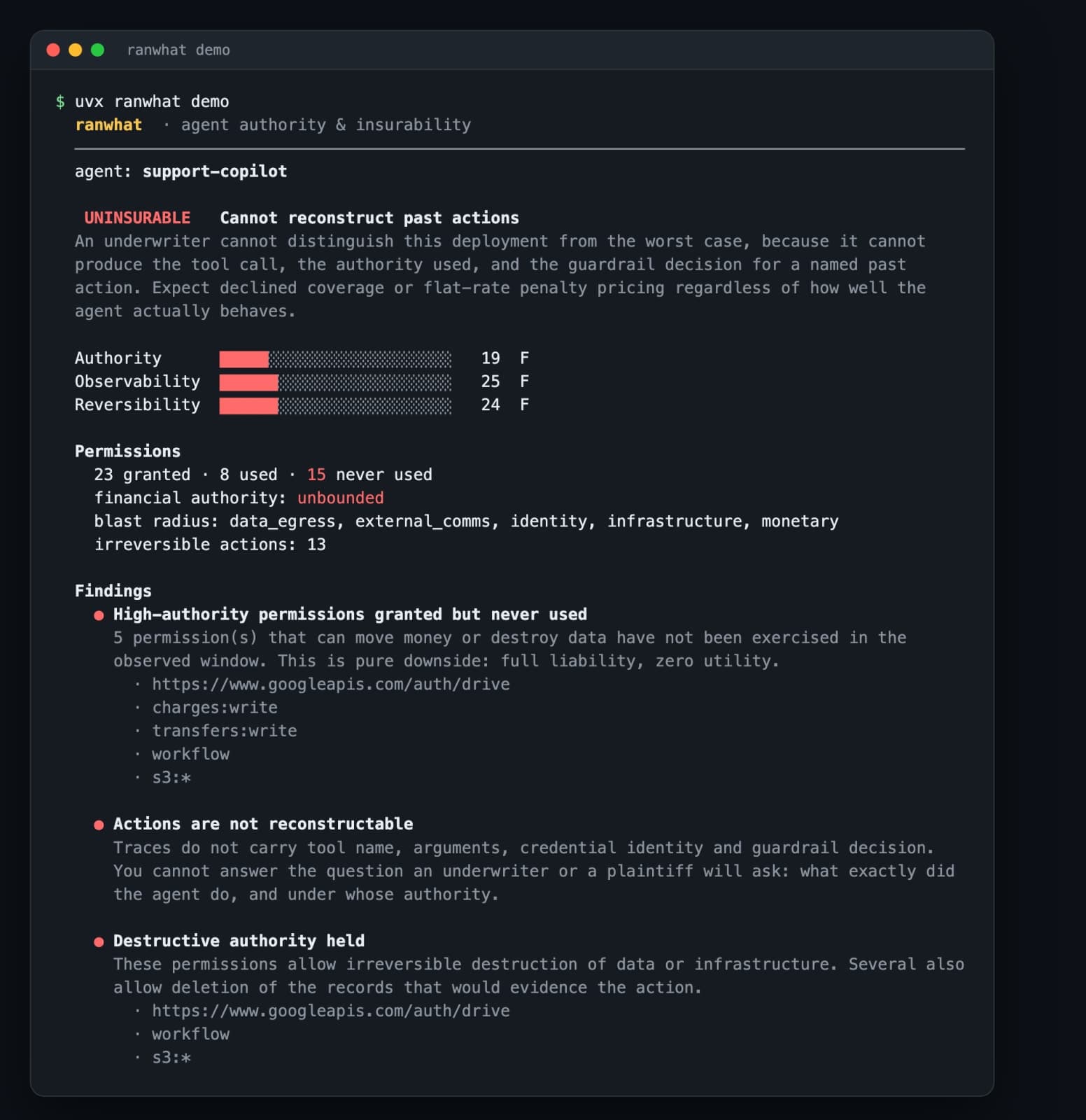
Your coding agent has your shell, your keys and your repo. ranwhat shows what it did with them. It is an open-source, MIT-licensed command-line tool that reads the history AI coding agents already write to disk: Claude Code, Codex, Gemini CLI, GitHub Copilot CLI, Qwen Code, Grok Build, Droid, Kimi, Pi, Muse Code and OpenClaw. It works after the fact, so there is no proxy, no wrapper and nothing in your agent's path. - watch flags the handful of actions worth knowing about: credential files read, recursive deletes, force pushes, packages published. - clean finds API keys and passwords left in transcripts, tells you what to rotate, and can mask them, with a backup first. - scan scores what an agent's tokens may do across 12 providers, including GitHub, AWS, Google, Slack and Stripe. It runs locally, with no account, no telemetry and no dependencies. A free run is one command: uvx ranwhat check

Gallery

ranwhat screenshot 1 of 1

Overview

Who is it for?

Developers and security teams using AI coding agents

Problem

Coding agents run with your shell, keys and repo, but nobody reviews what they actually ran, and their transcripts keep API keys in plaintext on disk.

Solution

ranwhat reads the history agents already write, flags the risky actions, finds and masks leaked secrets, and scores what each token is allowed to do.

What makes it unique

No proxy or wrapper: it works after the fact on files already on disk, runs locally with no account, and has no dependencies.